FAQs
Answers to the Questions We Get Every Day
Whether you are dropping off a bag of cans, hauling a truckload of scrap metal, or setting up a recurring pickup for a job site, the answer is probably below. Jump straight to your topic, or call (619) 349-2282 and ask us directly - we would rather answer the phone than have you guess.
General & About C4S
6 questions
Pricing & Getting Paid
6 questions
Visiting the Yard
6 questions
CRV & Containers
5 questions
Appliances, AC & E-Waste
6 questions
Demolition & Manufacturing
6 questions
Destruction & Green Waste
5 questions
Commercial Accounts
6 questions
General Questions About C4S Recycling
Who we are, where we are, and what happens when you pull into the yard.
What is C4S Recycling?
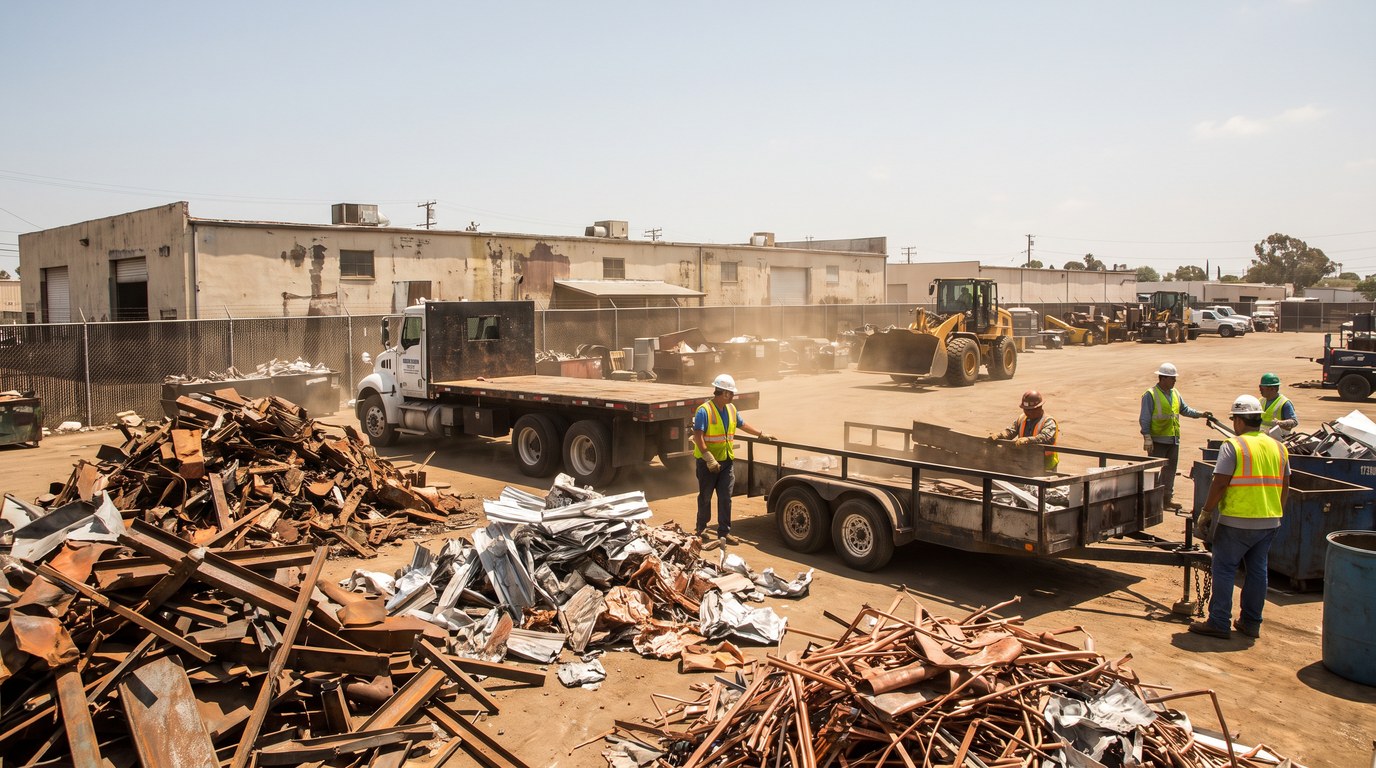
C4S Recycling is a CalRecycle certified recycling center and scrap metal buyer in Chula Vista, California. We serve two kinds of customers out of the same yard: walk-in members of the public bringing CRV containers, household metal and old appliances, and commercial accounts running ongoing scrap, demolition and recycling programs. See our services for the full list of what we handle.
Is C4S Recycling connected to C4S Demolition?
Yes - C4S Recycling is the scrap-metal side of C4S Demolition, a San Diego County demolition, hauling, and HVAC-recycling company with 20+ years in business. Same family, same East County roots, now with its own storefront for scrap metal and cash-for-scrap transactions. You can read more on our About page.
Where are you located and what are your hours?
We are at 1664 Industrial Blvd, Chula Vista, CA 91911, open Monday through Saturday, 8:00 a.m. to 5:00 p.m. The yard is closed Sundays. Call (619) 349-2282 or use our contact page if you need directions or want to confirm we can take your material before you load up.
Do I need an appointment to drop off scrap?
No appointment is needed for walk-in loads during business hours - just pull in during our open hours and our staff will direct you. For large commercial loads, roll-off container drops, or anything that needs equipment to unload, call ahead so we can have the yard and the scale ready for you.
What does CalRecycle certified actually mean?
It means the State of California has certified us to redeem CRV beverage containers and pay out the deposit you already paid at the register. Certified centers are registered with and audited by CalRecycle, which is what separates a legitimate redemption center from a yard that will only pay you scrap value for the same material. Our CRV recycling page explains how the program works.
What areas does C4S Recycling serve?
Our yard is in Chula Vista and we serve the South Bay - Chula Vista, National City, Imperial Beach, Bonita, San Ysidro and Otay Mesa - plus East County including El Cajon, Santee, La Mesa, Lakeside, Spring Valley, Rancho San Diego and Alpine. Commercial pickup runs throughout San Diego County. See our Service Areas page for your neighborhood.
Scrap Metal Pricing and Getting Paid
How scrap is priced, how it is weighed, and how California law says you get paid.
How is scrap metal priced?
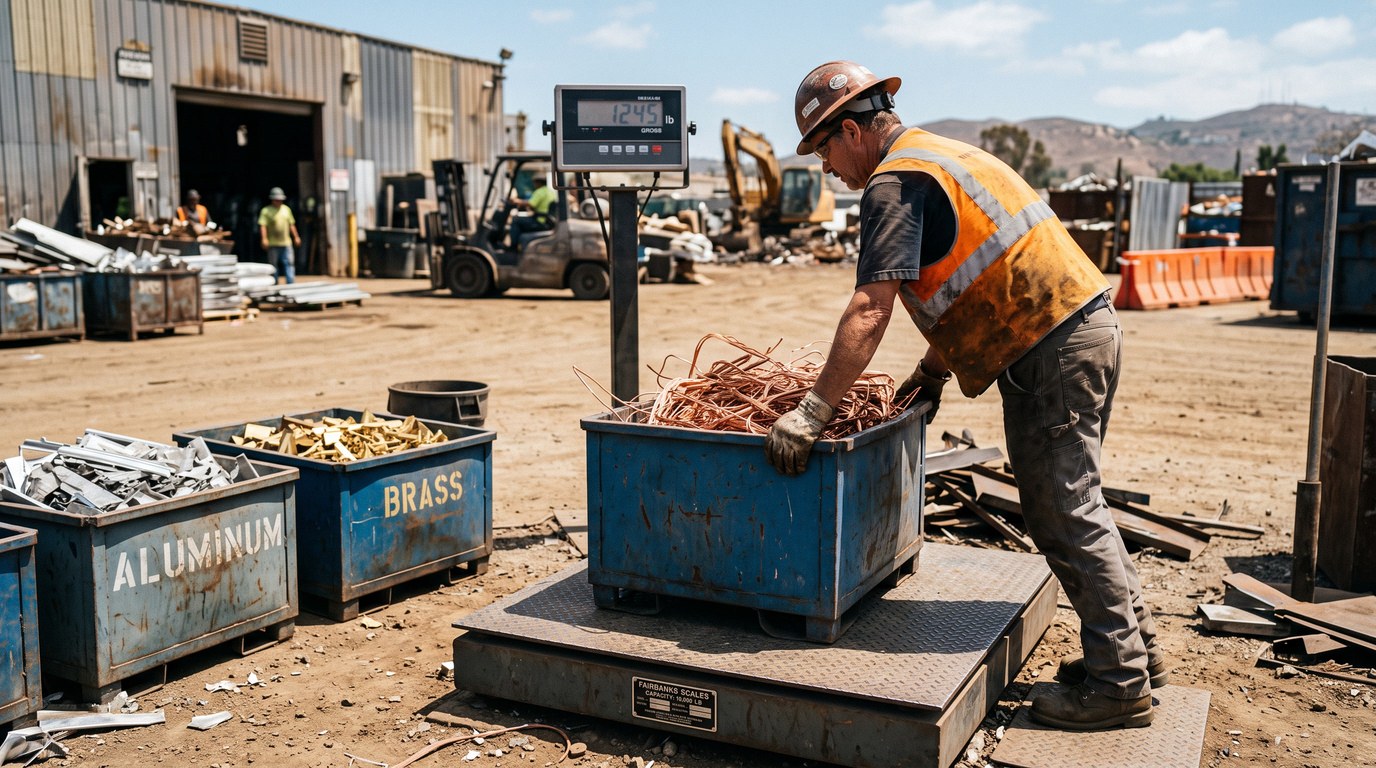
Scrap prices move with the commodity market, so we do not post a fixed rate online. Call ahead for today's price on your material - we weigh it accurately on our certified scale and pay what we say we'll pay. Price depends on the metal type, how clean it is, and how well it is separated.
Why don't you post scrap prices on your website?
Because any number we published would be wrong within days. Copper, aluminum, brass and steel all trade on global commodity markets that move daily, and a posted price would either mislead you or force us to quote low to cover ourselves. Call (619) 349-2282 for a real number on your material today, and read how scrap metal prices are set for the background.
Which scrap metal pays the most?
Non-ferrous metals pay the most - copper first, then brass, then aluminum - because they are more valuable and harder to source than steel. Ferrous metal like structural steel and appliances pays less per pound but comes in far heavier volumes, so a load of steel can still be worth bringing in. Our ferrous vs. non-ferrous guide shows how to tell them apart with a magnet.
Do you pay cash for scrap metal?
For non-ferrous metal, California law controls how and when recyclers can pay. Under Business and Professions Code 21608.5, payment can be made by cash, check or general-use prepaid card, but the funds cannot be collected until the third business day after the sale unless a check is mailed to your address on file. Ferrous metal and established business accounts are handled differently - ask us at the scale and we'll tell you exactly how your payment will work.
How do I know the weight is accurate?
We weigh on a certified scale and you get a ticket showing the weight and the rate you were paid. Any legitimate yard will weigh in front of you and hand you documentation - if a buyer won't, that is a red flag. Our article on spotting a trustworthy scrap metal buyer covers what else to look for.
Do I get paid more if I sort and clean my metal first?
Yes. Clean, separated material is worth more per pound than a mixed load, because mixed loads have to be sorted on our end and get graded down to the lowest-value metal in the pile. Separating copper from aluminum, stripping insulation where practical, and keeping steel out of your non-ferrous pile all put more money in your pocket.
Visiting the Yard: What to Bring and What to Expect
What California requires you to bring, and how to make the drop-off go quickly.
What do I need to bring to sell scrap metal?
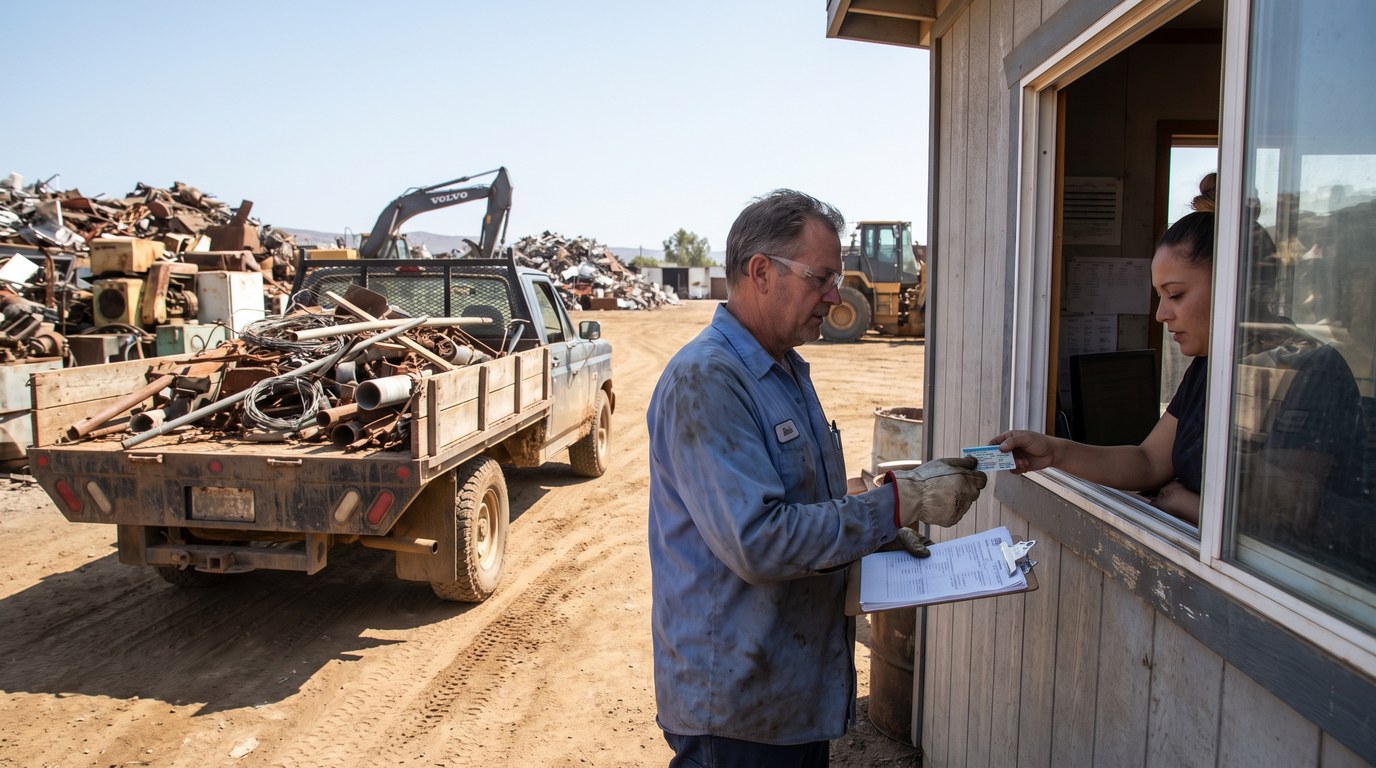
Bring a valid government-issued photo ID - California law requires it for scrap metal transactions. For non-ferrous material, state law also requires us to take a thumbprint and a photograph of both the seller and the material being purchased. For larger commercial loads, bring any documentation tied to the job site or the source of the material.
Why do you take a thumbprint and a photograph?
Because California requires it, not because we think you stole anything. Business and Professions Code 21608.5 requires recyclers to record a thumbprint and photograph the seller and the non-ferrous material on every qualifying transaction, and to retain that record. These rules exist to make stolen copper and wire hard to move, which protects honest sellers and contractors more than anyone.
Is there a minimum load size?
No minimum for walk-in customers - bring one AC unit or a truck bed full, we'll weigh either. For large or recurring loads it is worth calling ahead so we can be ready for you, and if the volume justifies it we can talk about a roll-off container instead of you hauling it yourself.
Can I bring a trailer, box truck, or flatbed?
Yes. Call (619) 349-2282 before you come with anything oversized or heavily loaded so we can plan where to put you and have the right equipment on hand. That one call is the difference between a fifteen-minute stop and waiting in the drive lane.
What can't you accept?
We cannot take hazardous waste, sealed or pressurized containers, items still holding liquids, or anything radioactive. Appliances containing refrigerant have to go through our appliance recycling program rather than straight onto the metal pile. If you are unsure about a specific item, call us before you load it - it takes thirty seconds and saves you a trip.
How should I prepare my load before I come?
Separate your metals by type, keep CRV containers apart from non-CRV glass, and drain and empty anything that held liquid. Come prepared to help unload smaller loads; for heavy or awkward material, call ahead so we can have equipment ready. A sorted load gets weighed faster and pays better.
CRV and Beverage Container Recycling
Cans, bottles and the California deposit you already paid at the register.
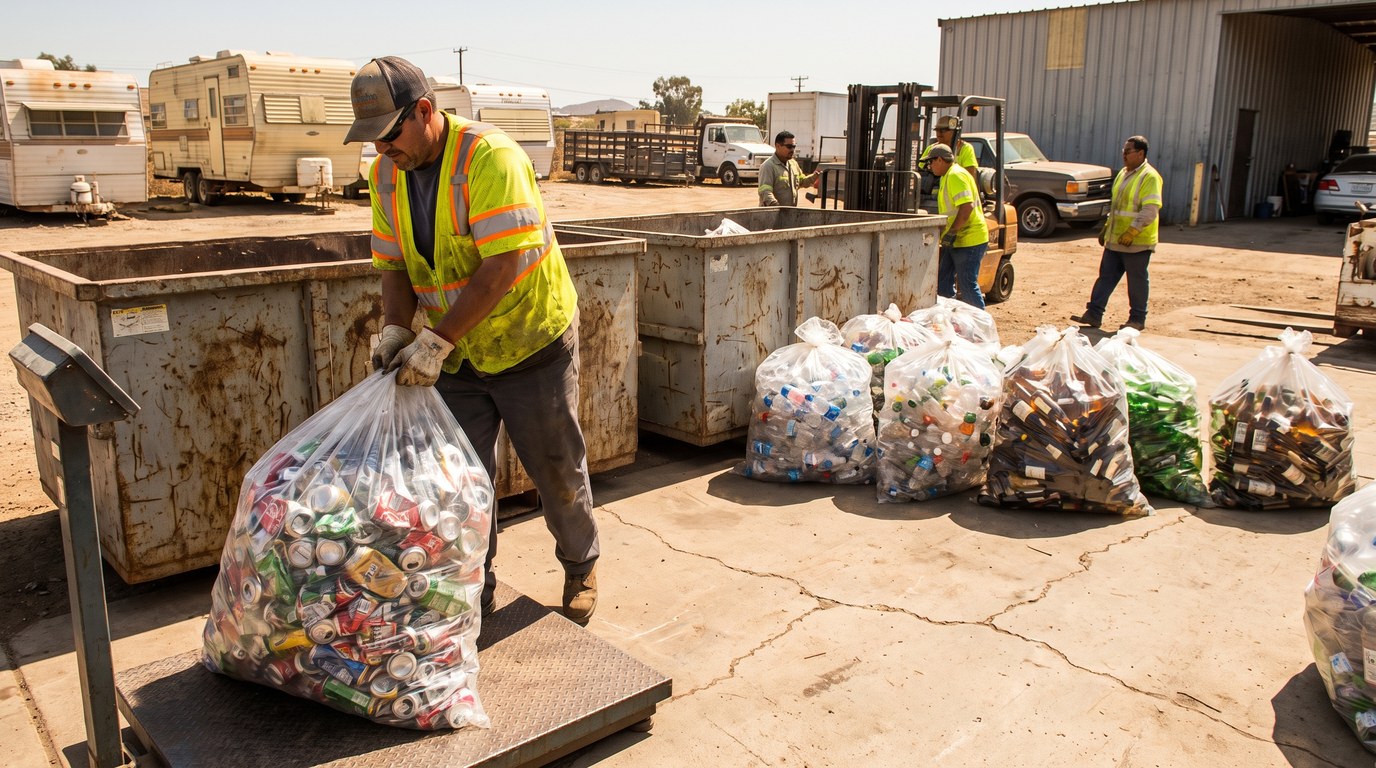
What is CRV and how do I get it back?
CRV - California Redemption Value - is a deposit added to most beverage containers when you buy them. You get that deposit back by bringing the empty containers to a CalRecycle certified redemption center like C4S Recycling. Full details are on our CRV recycling page.
Which containers qualify for CRV, and how much are they worth?
Containers labeled CA CRV or California Cash Refund qualify. The refund is 5 cents for containers under 24 ounces and 10 cents for containers 24 ounces or larger, across glass, aluminum, plastic and bimetal, and 25 cents for wine and distilled spirits sold in bag-in-box, pouch or paperboard carton formats. Containers must be whole and free of dirt, liquid and other contaminants to be redeemed. Our guide to finding a CRV recycling center walks through a first visit.
Am I paid by count or by weight?
You can request to be paid per container for up to 50 CRV containers of each material type per transaction - so 50 aluminum, 50 plastic and 50 glass. Above that you are paid by weight, subject to the state's daily load limits of 100 pounds each for aluminum and plastic and 1,000 pounds for glass. For most household loads, by count is worth asking for.
How should I sort my containers before I come?
Separate aluminum, plastic and glass into their own bags or bins, and keep CRV containers completely separate from non-CRV glass. Empty out any remaining liquid. Sorted loads move through the scale far faster and avoid a mixed load being downgraded - see our plastic bottle recycling guide for more.
Do you take non-CRV glass?
Yes - we accept non-CRV container glass, limited to food and beverage containers. Window glass, mirrors, ceramics, Pyrex and light bulbs are not container glass and cannot go in that stream. Keep it separate from your CRV glass so both can be handled correctly.
Appliances, AC Units, Chillers and E-Waste
Refrigerant recovery, old appliances, and where your electronics go.
Do you recycle AC units, chillers, and refrigerant?
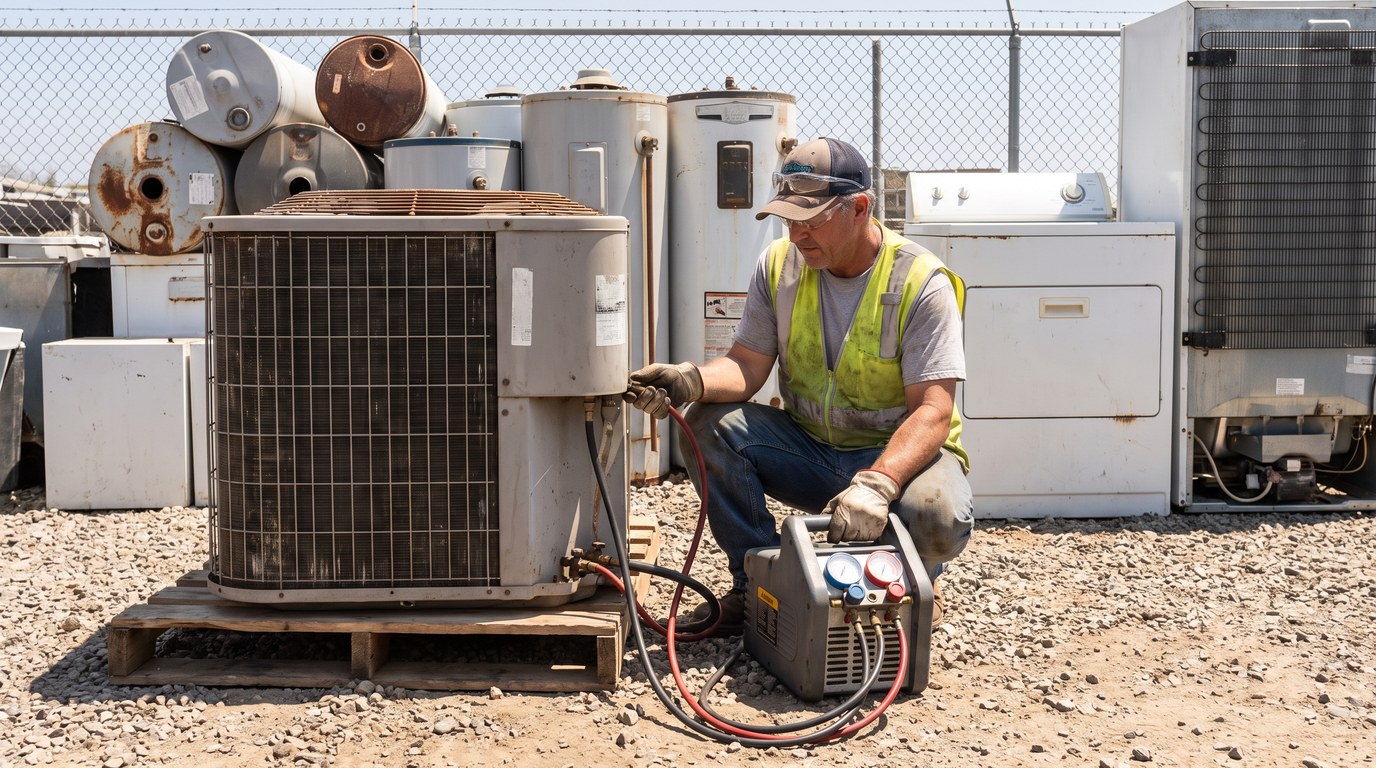
Yes. We handle AC unit and chiller recycling with EPA-compliant refrigerant recovery - this is an area C4S Demolition has worked in for years, so it's part of what makes C4S Recycling different from a standard scrap yard. See appliance and refrigerant recycling, or our walkthrough on how to recycle an old AC unit or chiller.
What happens to the refrigerant?
It is recovered before the unit is ever cut or processed, using proper recovery equipment and following EPA rules. Venting refrigerant to the atmosphere is a federal violation, which is why sealed systems cannot simply be thrown on a scrap pile. Contractors who need the paperwork can get documentation of recovery - our EPA refrigerant recovery guide for HVAC contractors covers the compliance side.
Do I have to remove the refrigerant myself before I bring a unit in?
No, and please don't try. Bring the unit intact with the system sealed and let our people recover the refrigerant properly. Releasing it yourself is illegal under federal law and can be dangerous - there is no upside to doing it in your driveway.
Which appliances do you take?
Refrigerators, freezers, washers, dryers, water heaters, stoves, dishwashers, window and rooftop AC units, and commercial chillers. Anything with a sealed refrigerant system goes through the recovery process first. Full details on our appliance recycling page.
Do you recycle TVs, computers, and other electronics?
Yes - we handle e-waste including televisions, monitors, computers, laptops and related electronics. See our guides to computer and electronic recycling in Chula Vista and where to recycle your TV.
Is there a charge to drop off an appliance?
It depends on the unit and its condition - some appliances have enough recoverable metal value to pay you, while units requiring refrigerant recovery or extra handling are priced case by case. Call (619) 349-2282 and describe what you have and we'll tell you straight before you load it.
Demolition, Manufacturing and Industrial Scrap
Job-site steel, recurring production scrap, and steel plate products.
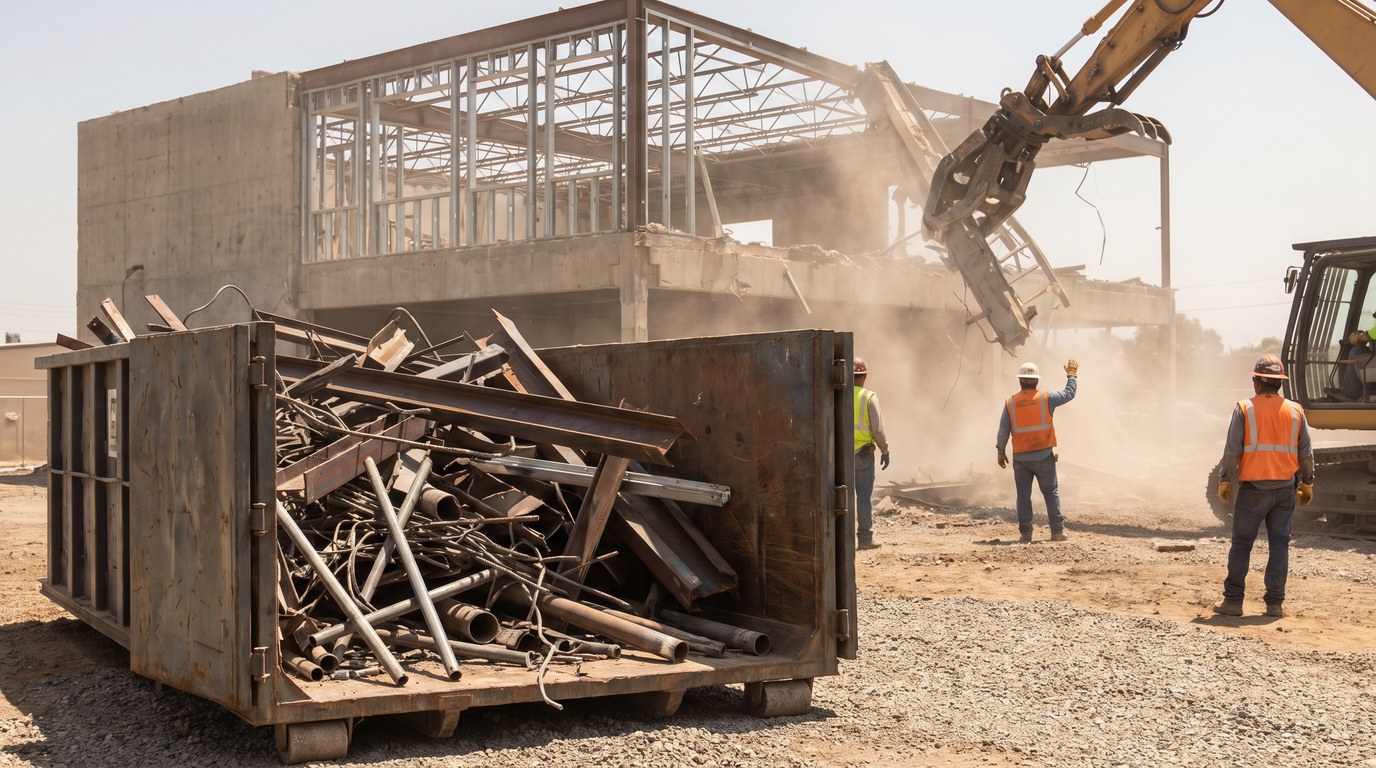
Do you handle scrap from demolition job sites?
Yes - demolition scrap is one of our core commercial programs, and it is the side of the business C4S has been in the longest. We take structural steel, rebar, pipe, conduit, metal studs, ductwork and mixed job-site metal. See our demolition scrap page for how a job gets set up.
Can you put a container on my job site?
Yes. Roll-off containers and scheduled pickups are available for demolition, construction and industrial accounts, so the material leaves your site on a schedule instead of piling up. Contact us with your site address, the type of metal, and roughly how fast it accumulates and we'll size the service to the job.
Do you buy ongoing manufacturing scrap?
Yes. Manufacturers with recurring production scrap - punch-outs, offcuts, turnings, drops, obsolete inventory - can set up a standing program with scheduled pickups and consistent pricing rather than one-off drop-offs. Details on our manufacturing scrap services page.
What is carbon plate steel and do you sell it?
Carbon plate steel is heavy flat steel plate used in fabrication, structural work and equipment repair, and yes - we supply it as a product, not just buy it as scrap. See carbon plate steel products for sizes and availability.
Will you take mixed loads from a job site?
Yes, we will take mixed metal - but understand that a mixed load is graded toward its lowest-value component. On an active site, having crews drop copper and aluminum into separate bins from the ferrous pile is usually worth more than the labor it costs. We can help set that up as part of a container program.
What actually happens to the metal after it leaves my site?
It is weighed, sorted by grade, processed, and sold on to mills and foundries that melt it back into new steel, aluminum and copper stock. That is the whole point of recycling job-site metal rather than landfilling it - the material re-enters the supply chain instead of taking up space in a dump.
Certified Destruction and Green Waste
Product that must be destroyed and documented, and organic material from land clearing.
What is certified destruction?
Certified destruction is the documented, witnessed destruction of product so it cannot re-enter the market - and you receive paperwork proving it happened. It is used for recalled goods, defective or failed inventory, counterfeit seizures, branded materials, and anything a company is contractually or legally obligated to prove was destroyed. See our certified destruction page.
What documentation do I get?
A certificate of destruction covering the load, along with the weight documentation from the transaction. That paper is the entire reason certified destruction exists - if a process does not produce documentation you can hand to a brand owner, an insurer, or a regulator, it is just disposal.
Why would a business need certified destruction instead of regular disposal?
Because regular disposal proves nothing. If a recalled or defective product turns up for sale later, or a regulator asks what happened to a quarantined lot, ordinary dumpster disposal leaves you with no evidence. Certified destruction closes that gap for manufacturers, distributors, and any brand protecting its name.
What green waste do you accept?
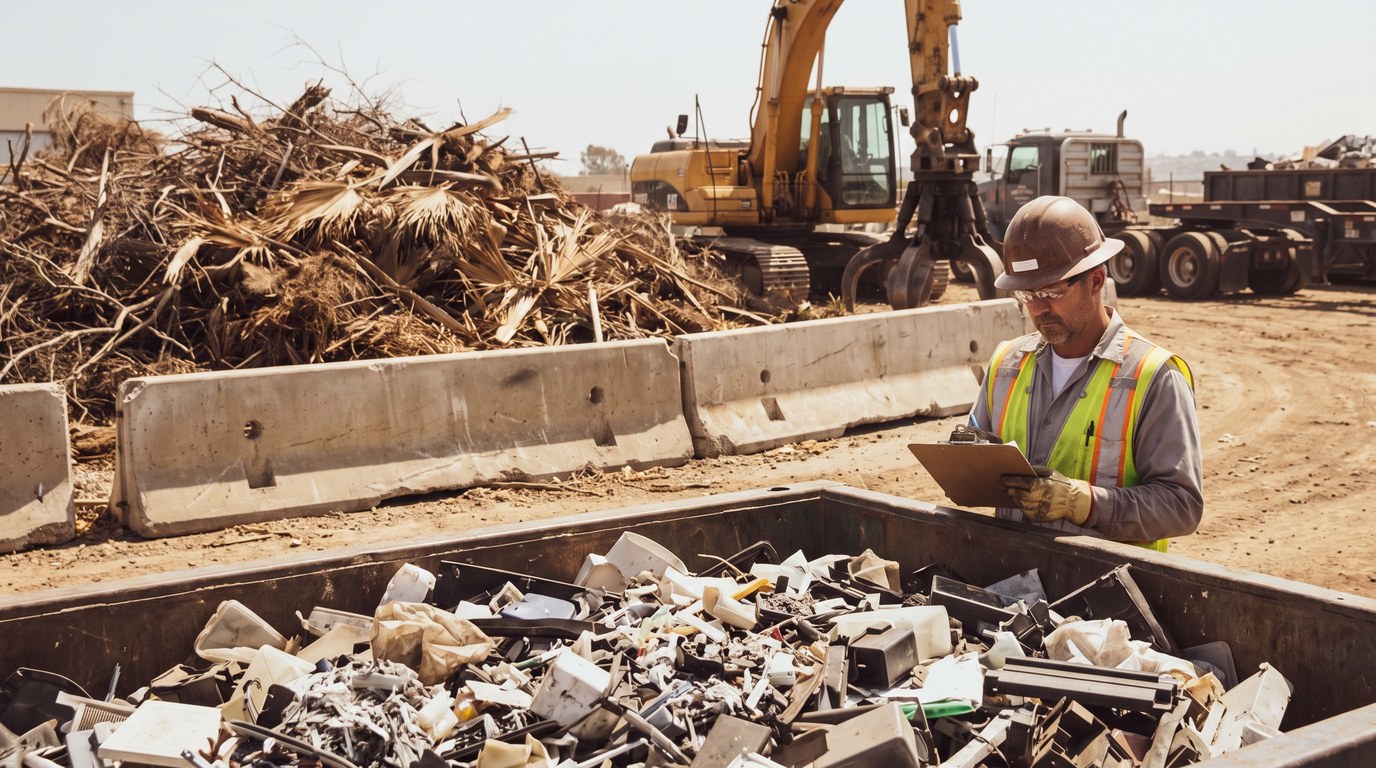
Organic material from land clearing and property maintenance - branches, brush, tree trimmings, palm fronds and similar yard debris. See our green waste recycling page for how loads are handled.
Can green waste be mixed in with metal or trash?
No. Green waste has to arrive clean - no metal, no plastic, no construction debris, no household trash mixed in. A contaminated load cannot be processed as green waste and has to be handled as something else entirely, which costs you time and money. Keep it separated on the site.
Commercial Accounts and Contractors
Setting up an account, terms, pickups, and the paperwork your compliance file needs.
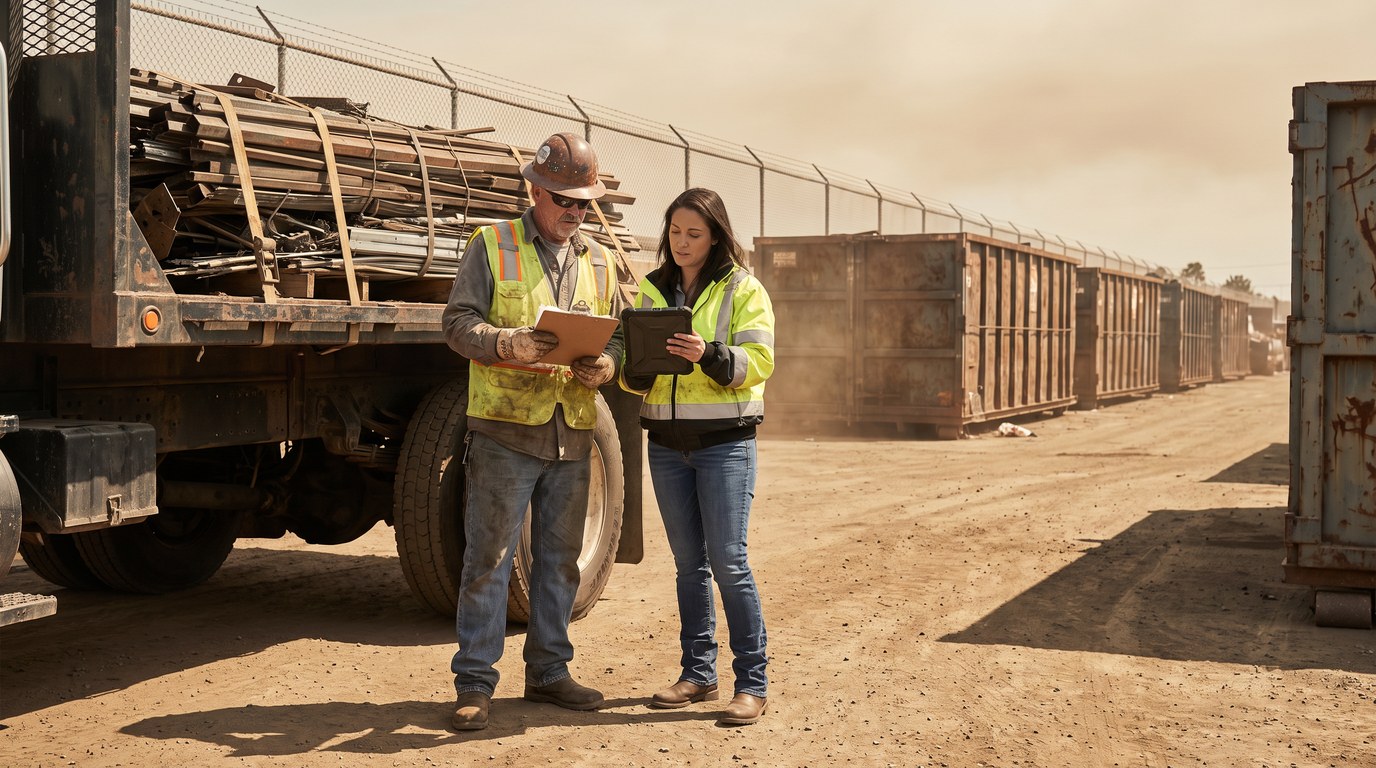
Do you work with contractors and commercial accounts?
Yes. HVAC, mechanical, and demolition contractors, along with property managers and general contractors, can set up roll-off containers, scheduled pickups, and net-terms billing with documented, EPA-compliant paperwork. Contact us to set up a commercial account.
How do I set up an account?
Get in touch with your business name, address, phone, and business license or tax ID number, plus a description of the material and roughly how much of it you generate. We'll set up the account and work out pickup frequency and container size from there. Start on our contact page or call (619) 349-2282.
Do commercial accounts go through the same ID and payment rules?
No - California treats established business sellers differently. Under Business and Professions Code 21608.5, when a recycler has a seller's business name, physical address, business phone, and business license or tax identification number on file, the individual ID, thumbprint and delayed-payment requirements do not apply to that account. That is one of the practical reasons to set up an account rather than transacting as a walk-in.
Do you offer net terms?
Net-terms billing is available for approved commercial accounts. Terms depend on volume, material type and account history, so it is a conversation rather than a form - reach out and we'll go through it.
What documentation can you provide for compliance files?
Weight tickets for every transaction, EPA-compliant refrigerant recovery documentation for appliances and HVAC equipment, and certificates of destruction where certified destruction applies. Tell us up front what your compliance file needs and we'll make sure the paperwork matches it.
Do you pick up across San Diego County?
Commercial pickup runs throughout San Diego County, from the South Bay and Chula Vista out through East County and beyond. See our Service Areas page for the neighborhoods we cover most often, or call us with your site address.
Still Have a Question?
Call the yard and ask. We will tell you whether we take it, roughly what it is worth today, and what you need to bring - before you load up and drive over.
1664 Industrial Blvd
Chula Vista, CA 91911
Hours
Monday - Saturday, 8:00 a.m. - 5:00 p.m.
Where to Go Next
Explore what we handle:
- CRV Recycling - cans, bottles and the California deposit
- Appliance Recycling - appliances, AC units and refrigerant recovery
- Demolition Scrap - job-site steel and container service
- Manufacturing Scrap Services - recurring production scrap
- Certified Destruction - documented product destruction
- Green Waste - brush, branches and land-clearing debris
- Carbon Plate Steel Products - plate steel for fabrication
- Service Areas - South Bay and East County neighborhoods we cover